
 Send Inquiry
7 Common Excavator Hydraulic Problems & Practical Solutions
Contents
There are many types of excavator problems, including hydraulic system problems, engine system problems, electrical system problems and slewing system problems. Among these, the most common problems are excavator hydraulic problems.
Hydraulic system plays a key role in the operation of excavators. It is the power center of the whole machine. The moving, slewing and excavating process all rely on the hydraulic system. Once the excavator hydraulic problems occur, the excavator will be slow,weak and almost unable to work.
In past cases, lot of problems occur in other parts of the excavator like valves, hydraulic circuits and hydraulic fluid condition.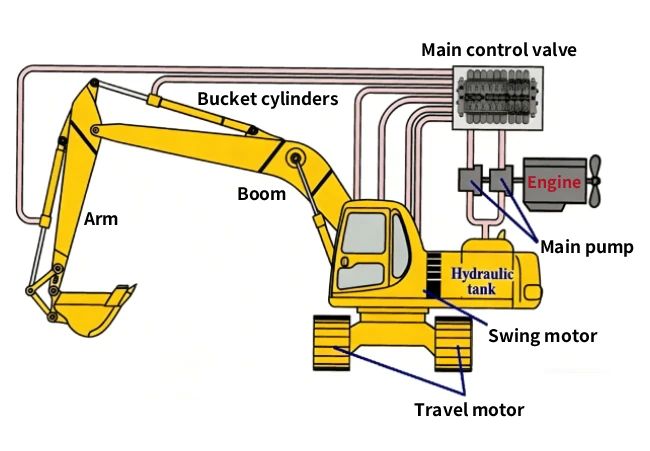
Blindly suspecting the main pump and frequently disassembling core components not only leads to high maintenance costs but also significantly prolongs the downtime.
For excavator operators and owners, downtime losses due to repeated disassembly and reassembly, and delays in the construction process will cause higher losses. Reducing maintenance costs and shortening maintenance time is exactly what our blog aims to help with.
Now let’s take a look at the 7 most common excavator hydraulic problems and how to deal with them. Hope this article can help you quickly find the root cause of the problems and avoid unnecessary disassembly.
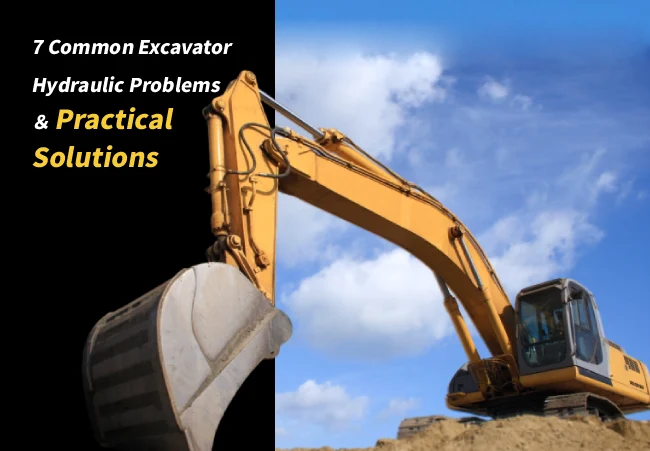
1. The Excavator Boom Fails to Lift or Lifts Slowly
This is a excavator hydraulic problem that frequently occurs. The boom can lift normally with no load, but once it is carrying soil, sand, bricks, or other material, it feels weak. It either can’t lift at all, or lifts halfway and then starts to drop, while the bucket works perfectly fine.
Many operators think that there must be something wrong with the excavator’s hydraulic main pump or the main relief valve. Actually, if only the boom went wrong and other parts of the machine(like the bucket) can still run smoothly, the main pump is obviously fine. In this situation, the problem is more likely to be in the boom itself.
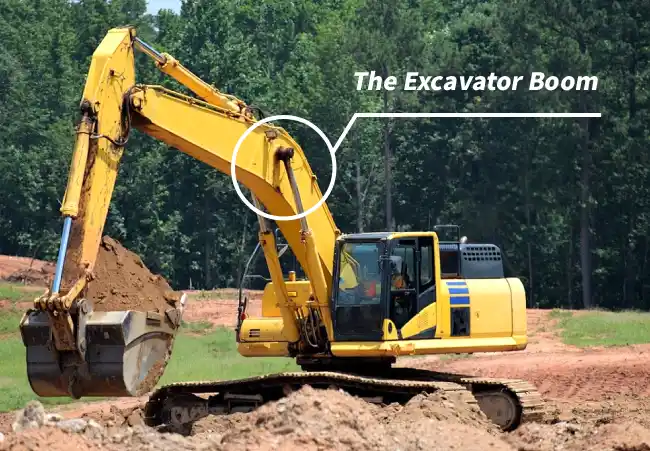
For example:
– Internal leakage in the boom cylinder
– Aging of sealing elements
– Minor oil leakage from hydraulic hoses or fittings
– Leakage in the boom control spool valve
Solutions:
1. Measure the pressure of the boom lifting circuit and verify if it meets the design value.
– Park the excavator on a flat land. Lower the bucket to the ground.
– Turn off the engine. Repeatedly operate the control lever to release residual pressure.
– Connect an appropriate pressure gauge to the test port of the boom lift oil circuit.
– Start the engine. Make oil temperature rise to normal operating temperature.
– Raise the boom up with load to the maximum position.
– Hold for 3-5 seconds and read the pressure value.
Judgement Standard
– If pressure is obviously below standard: Leakage exists in the boom circuit or there is a valve malfunction.
– If the pressure is close to or reaches the standard level, but the boom is still weak: It is very likely to be internal leakage in the cylinder.
2. Check whether there is internal leakage or response lag in the boom counterbalance valve.
– Raise the boom to a medium-high position.
– Return the control lever to the neutral position.
– See if the boom descends on its own.
Judgement Standard
– If the boom slowly descends: Internal leakage in the balance valve.
– Remains still at the beginning but then slowly descends: Relief valve response is sluggish or the spring is fatigued.
– If it does not descend at all: Counterbalance valve is normal.
Operating steps:
– Remove the counterbalance valve of the boom.
– Thoroughly clean the spool and valve bore.
– Check if the spool is broken.
– Check if the spring is fatigued or broken.
– Check if the sealing ring is aged.
If the seals are aged, we should replace the seals
If there is slight scoring on the spool, we should polish it with fine sand paper.
If the spool is worn: We should replace the counterbalance valve assembly.
3. Check whether there is any obvious internal leakage in the boom cylinder.
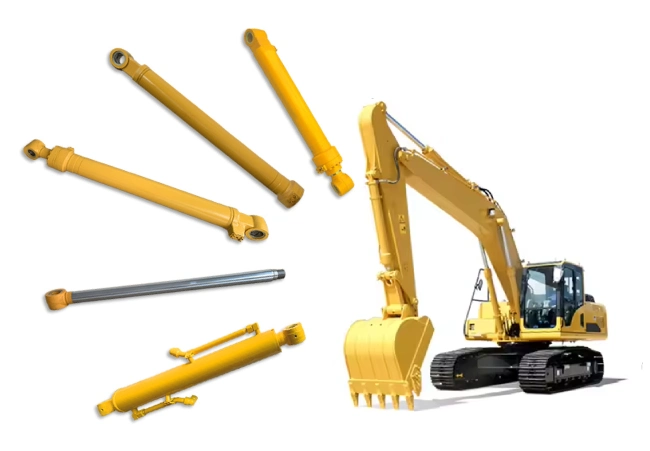
Quick Diagnosis Method:
– Lift the boom with load
– Keep the engine at idle
– Return the control handle to the neutral position
– Observe the boom’s condition
If the boom slowly descends, and there is no external oil leakage: It is very likely to be internal leakage in the cylinder.
If the boom descends quickly and feels weak: The piston seals are severely worn
Accurate Diagnosis Method:
– Remove the oil return pipe of the boom cylinder
– Start the machine.
– Operate the boom lift.
If a large, continuous flow of oil comes from the return port: Internal leakage in the cylinder. We have to repair it.
Troubleshooting:
– Disassemble the boom cylinder.
– Replace the following components:
Piston seals
Guide rings
Wiper seal
– Check the cylinder barrel:
Slight scoring: Precision polishing.
Severe scoring: Replace the cylinder.
4. Inspect or clean the corresponding valve core in the operating valve.
Operation Procedure
– Remove the boom spool from the main control valve.
– Clean it with diesel fuel or a dedicated cleaning fluid.
– Push the spool manually by hand.
Diagnosis Standard
– If the valve moves smoothly without sticking: The spool is basically normal.
– If it sticks or has high resistance: The spool is contaminated or worn.
– If there are obvious scoring marks on the surface: Internal leakage exists, and the spool must be replaced.
Troubleshooting
– Slight contamination: Clean it.
– Minor scoring: Polish it.
– Severe wear: Replace the spool or the valve body.
2. The Boom is Normal But the Bucket is Weak
This is also a frequently occurring problem. The boom and arm can work normally, but the bucket have trouble digging. The dumping and retracting movements lack energy and cannot be completed normally. In this situation, the hydraulic system as a whole is fine. If there is anything wrong with the hydraulic main pump, main control valve, or hydraulic oil, the bucket should not be the only part that is affected.
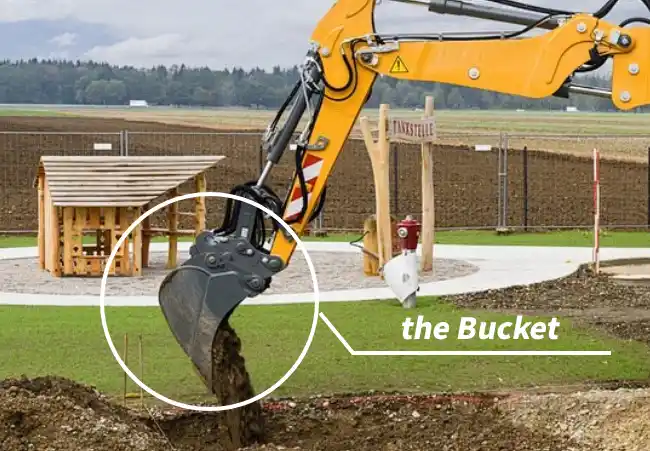
Possible causes:
– Internal leakage in the bucket cylinder
– Worn seals in the bucket control valve
– Failure of the local relief valve in the bucket circuit
Solutions:
1. Test the bucket digging circuit pressure
Connect a pressure gauge to the test port on the bucket digging circuit. Turn the engine to medium or high speed, operate the bucket to make a full dig, and then watch the pressure value.
If the pressure is significantly low, there might be leakage in the circuit or the relief valve opens too early. We need to continue checking the valves.
If the pressure is close to the standard level, this means the system has normal pressure. We should focus on the oil cylinder.
2. Check if the bucket cylinder has internal leakage or unbalanced movement
When the bucket is loaded with soil, hold it in the air, return the control lever to the neutral position and see whether it will descend slowly. Do the “bucket retraction – stop – bucket dumping” process repeatedly and see if one action is faster while the other is slower.
If the bucket drops on its own or acts sluggishly, it might be internal leakage in the oil cylinder.
We should disassemble and repair the oil cylinder, and replace the piston seal and guide ring.
If the cylinder barrel is severely scratched, the barrel must be repaired or the entire oil cylinder replaced.
3. Inspect the pressure setting of the bucket circuit relief valve
We need to find the local relief valve of the bucket circuit, connect a pressure gauge to it, operate the bucket to its limit position, and observe the relief pressure.
If the relief pressure is too low, we should adjust or replace the relief valve.
If the spool is stuck or the seal is aged, we should clean or just replace the valve.
4. Inspect if mechanical resistance affects the hydraulic system
We should check if the bucket connecting rods, pins and bushings are lacking in oil, rusted or deformed. We can feel if there is any sticking with our hands.
If it lacks oil, use grease.
If pins and bushings are severely worn, replace them.
If connecting rods deformed, replace them.
3. All Hydraulic Functions are Weak
In this situation, all hydraulic functions — the movements of boom, arm and bucket are weak and sluggish. Engine speed remains normal, but working efficiency obviously dropped.
Possible causes:
– Blockages in the hydraulic oil circuit
– Internal leakage in the main hydraulic pump
– Pressure of main relief valve is too low
– Pressure-reducing valve malfunction
Solutions:
– Measure main pump pressure to confirm if it reaches the rated value (*use a pressure gauge)
If pressure is normal, this means the main pump is basically normal. Check other parts.
If pressure is obviously too low, the main pump might be worn or have internal leakage.
First, we should check whether the suction oil pipe is leaking and whether the filter is clogged.
If there is still no improvement, the main pump needs to be repaired or replaced.
– Check and adjust the main relief valve if necessary
Remove the main relief valve and see if the spring is weak, the spool is stuck or contaminated.
If the valve is dirty or stuck, we should clean it and reinstall
If the spring is weak or damaged, we should replace the spring or the whole relief valve.
– Inspect hydraulic oil condition and replace the oil and filters if necessary
Check the color and odor of hydraulic oil. Check the return filter and suction filter for blockage.
If oil looks dark and contaminated, we should replace the oil.
If the filter is clogged or deformed, we should replace the filter.
– Check if serious internal leakage exists in the hydraulic system
We need to check if the pressure of each pressure reducing valve is low, and if the hydraulic system overheats and the actions are weak.
If it is the problem with pressure reducing valves, we should clean or replace them.
If internal leakage exists, we should check the main pump and main valve. If necessary, repair or replace them.
In this way, we can find out which part needs repairment or replacement.
4. Both the Boom and Arm Operate Abnormally
In this case, both the boom and arm are weak. Multiple functions controlled by the same valve group are abnormal, while other functions are basically normal.
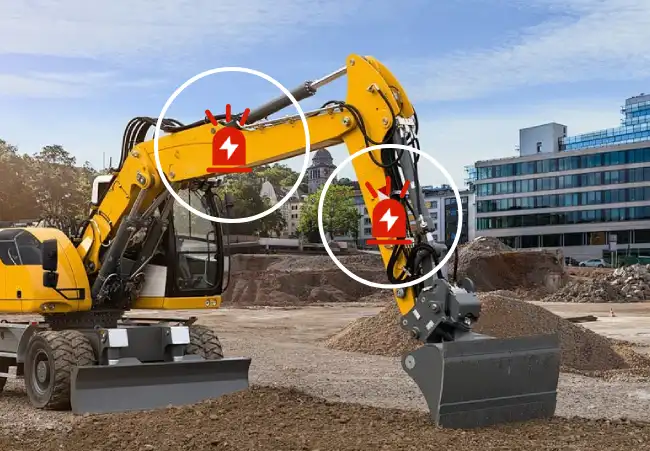
Possible causes:
– Internal failure of the control valve assembly
– Performance degradation of a subsystem hydraulic pump
– Local relief valve malfunction
Solutions:
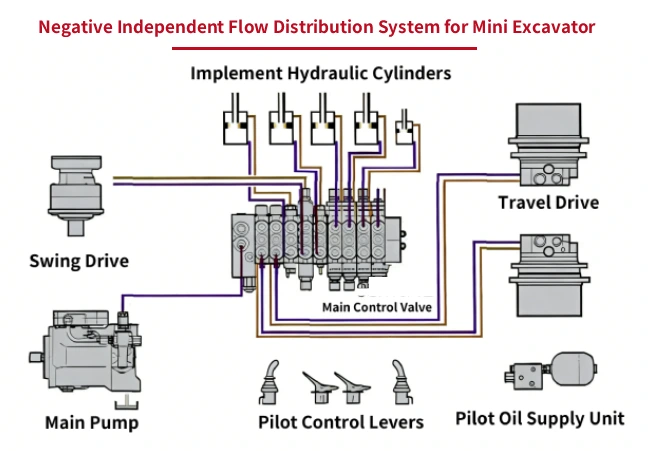
This is usually not the problem with a single component. It is highly possible that there is something wrong with the shared part of the hydraulic circuit for the boom and arm, typically located upstream of the relief valve.
For this type of issue, we should focus on checking whether the hydraulic system has sufficient oil, whether the hydraulic pump and engine drive system are operating properly, and whether the oil lines run smoothly.
– Check hydraulic oil levels and oil lines: If oil is insufficient, add hydraulic oil. If oil pipes are abnormal, clean or replace them.
– Check subsystem hydraulic pump: Check the pressure of the circuits for the boom and arm, and listen for abnormal noise from hydraulic pump. If pressure is too low, it indicates the performance reduction of the pump. We should also check if there is any problem with the drive coupling. If necessary, repair or replace the hydraulic pump.
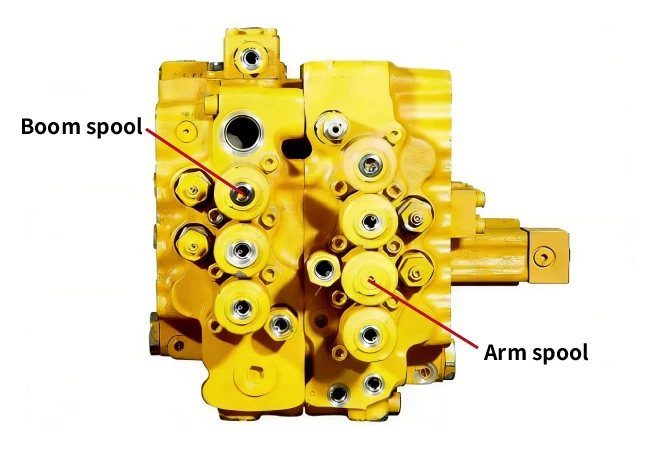
– Inspect the control valve group: Focus on whether the control spools for the boom and arm are stuck or contaminated. If it’s light spool sticking, we should disassemble, clean and reinstall the spool. If it is severe spool wear, we should replace the relevant spool or valve body.
– Check the local relief valve: Check the relief valves installed on the common circuit of the boom and arm. Then measure whether their set pressure is low. If the spool is dirty or spring is fatigued, we should clean or replace the relief valve. Then we should readjust the relief pressure to the standard value.
5. Travel System Problems
The symptom is that the excavator deviates to one side when moving, and the speeds of the left and right tracks are different.
Possible causes:
– Uneven track tension between the left and right sides
– Internal wear or leakage in the travel motor
– Unbalanced output from the main hydraulic pump
– Internal leakage in the center swivel joint
– Abnormal pressure in the travel main valve
Solutions:
For such problems, what we need to do is to figure out whether left and right travel circuit pressures are the same, check the travel motor seals and internal wear, check if internal cross-leakage exists in the center swivel joint, and make sure there is no hydraulic valve group balance issues. Then we can carry out repairs based on the results.
– Adjust track tension: First, check if the left and right tracks have the same tension. Then adjust tension bolts or hydraulic tension cylinders.
– Check travel motors: Measure circuit pressure and listen for abnormal noise. Inspect seals and look for internal wear. If seals or motors are damaged, replace them.
– Check hydraulic main pump: First, measure left and right circuit pressure. Then, check pump and suction lines. If necessary, repair or replace the pump.
– Check central swing joint: Check for pressure loss or oil cross-flow. If the swing joint is faulty, replace it.
– Check travel main Valve. Check valve spool and spring. Clean or replace worn parts. Adjust pressure to the specified value
6. Excavator Hydraulic Oil Overheating
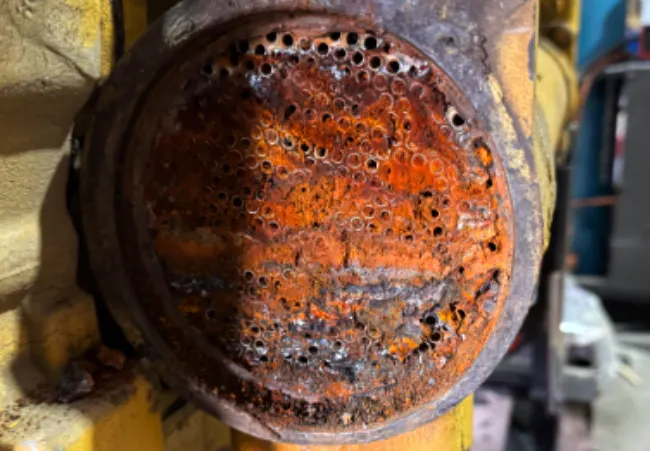
Under the circumstances, the hydraulic oil heats up too quickly. The excavator is normal under cold machine state, but gets weak and slow in hot machine state. The system noise becomes louder, and the operation is unstable.
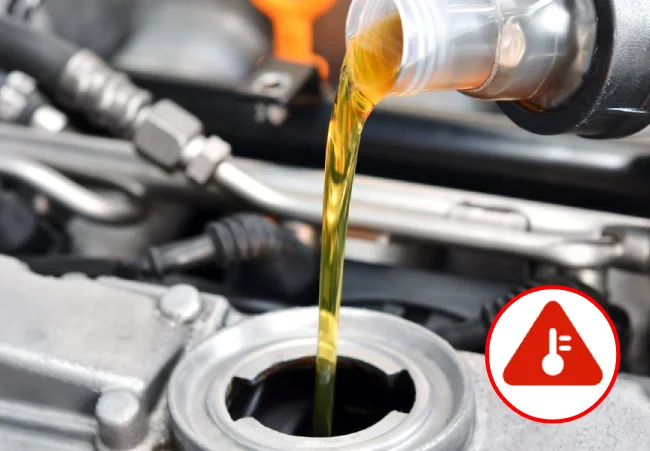
Possible causes:
– Severe internal leakage within the system
– Insufficient cooling capacity
– Incorrect hydraulic oil type or viscosity
Solutions:
– Check the hydraulic system for abnormal internal leakage
– Confirm that the hydraulic oil type matches operating conditions
– Inspect the oil cooler for blockage or poor heat dissipation
– Optimize operating methods and avoid long-time overload
7. Hydraulic Oil Leakage and Contamination
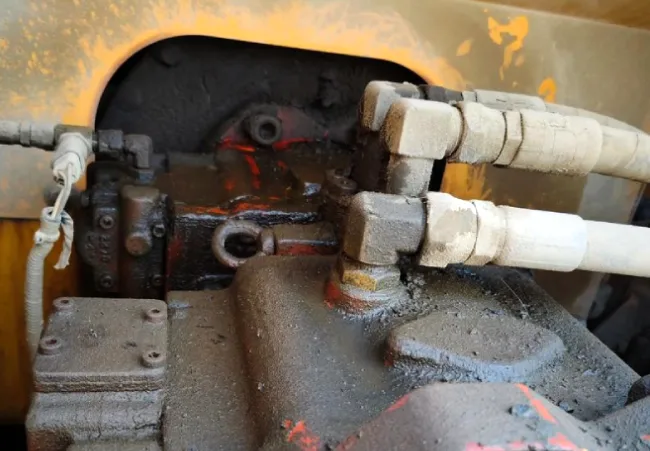
Common manifestations include oil leakage from hoses or fittings, hydraulic oil becomes dirty and system noise increases.
Possible causes:
– Aging or damage of the seals
– The hose connections are loose
– The working environment is dusty
Solutions:
– Inspect and replace worn seals
– Tighten or replace damaged hose fittings
– Replace filters regularly to keep the oil clean
– Carry out system maintenance according to the maintenance cycle
How to reduce excavator hydraulic problems through maintenance
Compared to repairing failures after they occur, good daily maintenance is better since it is more cost effective.
For example, we can maintain the good working condition of our excavators by following these maintenance tips:
1. Keep hydraulic oil clean
We can replace hydraulic oil and filters regularly to prevent contamination. This is key to extending the lifespan of hydraulic components.
2. Monitor system pressure and temperature
Abnormal pressure or temperature is often an early warning sign of hydraulic problems.
3. Inspect key components regularly
We need to pay close attention to hydraulic hoses, seals, and valve assemblies to reduce the risk of sudden failures.
Diagnose Excavator Hydraulic Problems with a System-Level Approach
When talking about hydraulic system troubleshooting, we should understand that an excavator’s hydraulic system does not rely on a single component. It is a highly integrated system.
When excavator hydraulic problems occur, don’t blindly replace parts just based on your past experience. Instead, we should do systematic troubleshooting and logical diagnosis. In this way, we can not only shorten downtime, but also significantly reduce repair costs.
YUFAN Excavators — Your Ultimate Choice
A stable and reliable hydraulic system is one of the core design principles of YUFAN excavators. As a leading excavator manufacturer, YUFAN effectively reduced hydraulic failures through precise system layout and using high-quality components.
Even under heavy loads, long time continuous operation and complicated working conditions, YUFAN excavators can still keep a normal working efficiency. If you are looking for an excavator with stable hydraulic power, YUFAN is your ultimate choice.
Here’s an example of information about the hydraulic system of YUFAN excavators.
Main Process Parameters of the Hydraulic System for a YUFAN YFT 18 Excavator
Serial No. | Item | Parameter | Serial No. | Item | Parameter |
1 | Power | 11.9kW | 7 | Travel speed | 3km/h |
2 | Max. digging height | 3200mm | 8 | Rotation speed | 9rpm |
3 | Max. dumping height | 2300mm | 9 | Max. gredeability | 30° |
4 | Max. digging depth | 2200mm | 10 | Bulldozer max. depth | 190mm |
5 | Operating weight | 1800kg | 11 | Bucket digging force | 16.5kN |
6 | Bucket capacity | 0.03m³ | 12 | Hydraulic system pressure | 16MPa |

Posted by Isabel leave words
Thanks for reading. I hope my article helps. Please leave a comment down below. You may also contact YUFAN online customer representative for any further inquiries.
 English
 Arabic
 Chinese (Simplified)
 Dutch
Dutch English
 French
 Italian
 Portuguese
 Russian
 Spanish
Leave a Reply