
 Send Inquiry
How to Use an Excavator to Dig a Trench?
Contents
Using a mini excavator to dig a trench is much easier and faster. Instead of hard and slow manual work, you can dig in a modern, efficient, and accurate way. This is very useful for farm drainage ditches, irrigation channels, and pipe laying.
This guide will show you step by step how to use a mini excavator to dig a straight trench. At the same time, you will learn how to work safely and easily. Keep reading to learn the key skills and steps to dig a high-quality ditch with your mini digger.
Preparations before Construction
Step 1. Check the Site
Confirmation of underground pipelines
▪️Find underground pipes or cables before starting work.
▪️Set a warning area on both sides of the pipes/cables. Never dig inside this area.
Ground environment inspection
Look around the site for any other hazards or obstacles, such as buildings or utility poles, and reserve sufficient clearance for the excavator to swing and operate (keep at least 1.5 times the machine’s body width). Make sure the working area is safe for the excavator to enter.
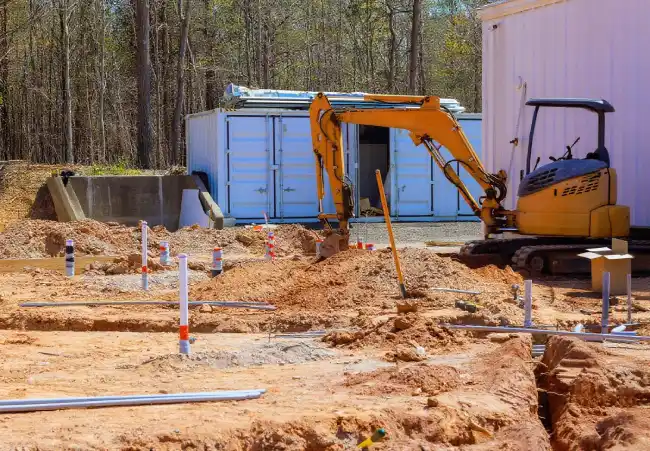
Step 2. Clear the Area with Excavator
1. Use the excavator to remove obstacles like big stones, tree roots, or trash.
2. Use the bucket to push away grass and surface weeds along the ditch line.
3. Level the ground along the whole ditch path with the bucket.
4. Make sure the excavator tracks stay stable and flat on the ground for safe operation.
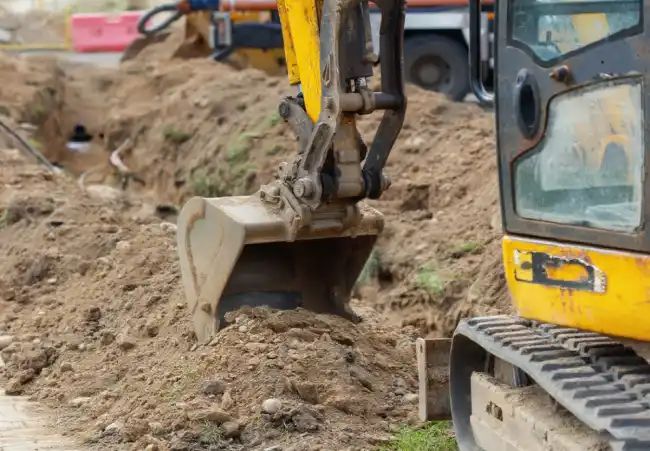
Step 3. Equipment Inspection and Commissioning
Core Component Inspection
▪️Before start-up, check whether the fuel, engine oil, coolant, and hydraulic oil levels are normal
▪️Inspect tire / track wear (tracks should be adjusted to a proper tension)
▪️Ensure the connection pins of the bucket, arm (stick), and boom are secure
▪️Check for any seepage or leaks in the hydraulic lines
Control System Commissioning
▪️After starting the engine, let it idle for 3–5 minutes (extend to about 10 minutes in winter) to preheat the hydraulic system.
▪️Test whether the control levers (boom, stick, bucket, swing, travel) move smoothly, whether the motions are coordinated, and whether the brake, horn, and lights function properly.
Step 4. Define Trenching Parameters: Mark the Ditch Line
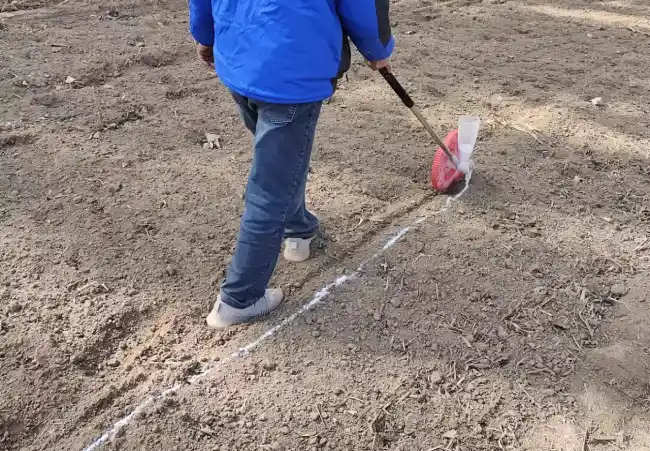
According to construction requirements (e.g., drainage, pipe laying, cabling), use marking powder (lime) or a chalk/string line to mark the trench centerline, width, and start/end points on the ground, and indicate depth (you may place a stake every 5 meters with depth graduations).
Typical trench dimensions for small excavators: Width 0.3–1.5 m; Depth 0.5–3 m (must match bucket capacity; small machines with bucket capacity 0.1–0.5 m³ are generally suitable for shallow to medium trenches).
1. Mark the line with lime powder or spray paint.
2. If no paint/lime, use excavator track marks as a guide line.
3. Make sure the line is straight and visible.
Step 5. Change the Bucket
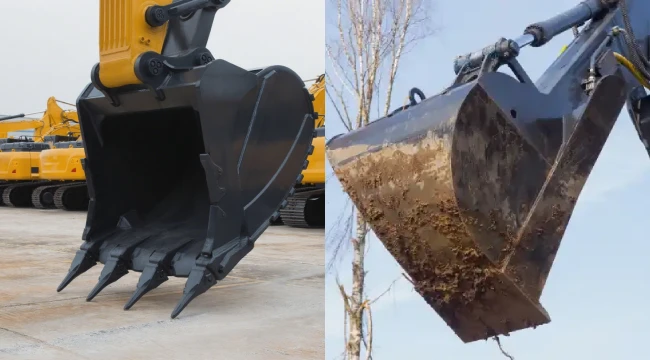
1. Change to a bucket narrow at the bottom, wide at the top.
2. This makes side slopes smoother and helps later soil work.
Construction Procedure
Step 1. Position the Excavator
1. Align excavator body center with the marked line.
2. Drive the tracks right on the line.
3. Keep the middle tooth of the bucket on the line.
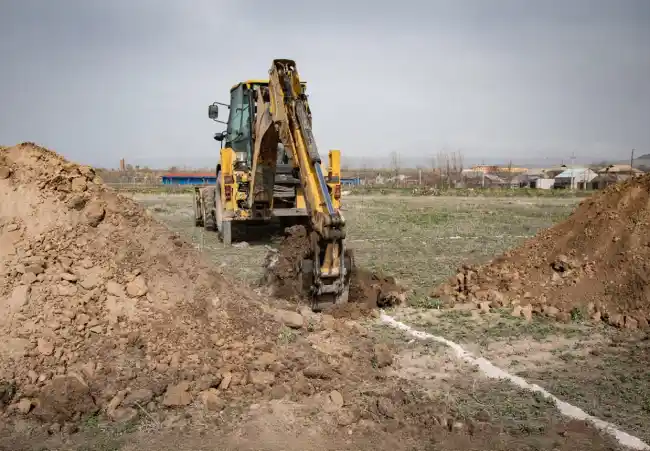
Step 2. Perform a Trial Dig
Lower the boom, extend the stick, keep the bucket close to the ground, and slowly cut into the soil (cutting depth no more than 30 cm). Then retract the stick and raise the boom, casting the excavated soil to one side of the trench (the spoil pile should be at least 1 meter away from the trench edge to prevent collapse). After the trial dig, check whether the trench width and depth meet the requirements and adjust operating force accordingly.
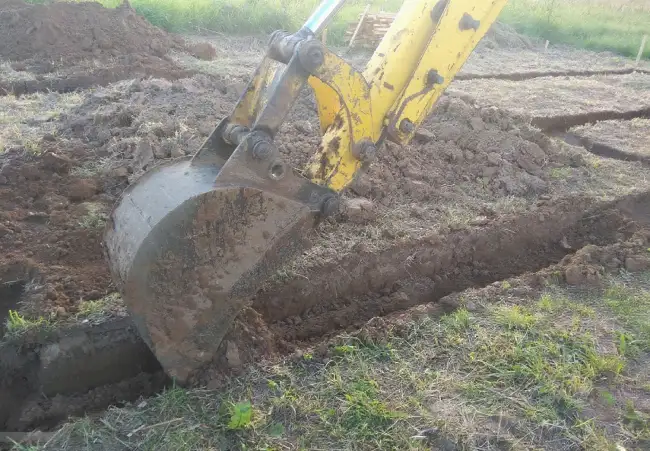
Step 3. Start Digging Layer by Layer
When using a small excavator to trench, excavation should proceed in layers (especially when the depth exceeds 1.5 m) to avoid trench wall collapse caused by digging too deep in a single pass.
▪️Start at the ditch end and move backward.
▪️Dig in layers: first top soil, then deeper soil.
▪️Never dig full depth at once.
▪️Keep side slopes even, adjust slope by soil type and depth.
▪️For deep ditches, dig step by step to save fuel.
▪️If ditch is wider than bucket, dig from both sides to the middle.
Step 4. Keep the Ditch Straight
1. After each bucket, move one step back.
2. Always check behind to keep the machine straight.
3. If you have a guide line, follow it closely.
4. If no line, press your own track line and follow it backward.
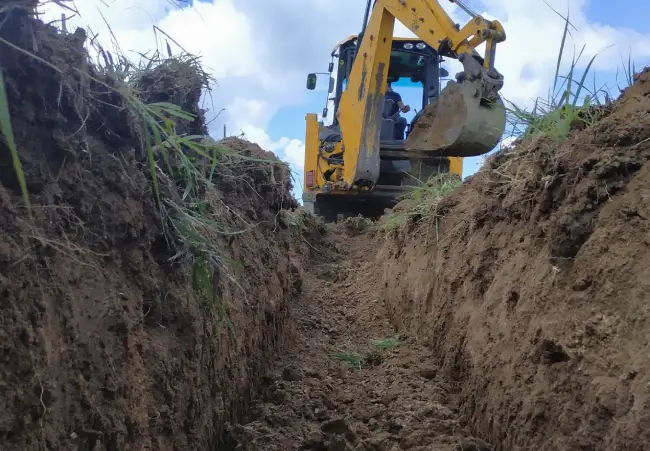
Step 5. Finishing and Safety
1. Trim the slopes as you dig to prevent collapse.
2. Level the ditch bottom: keep both flatness and depth correct.
3. For side/angled ditches, use boom, stick, and bucket evenly.
4. Don’t pull stick too hard, or the machine may go off line.
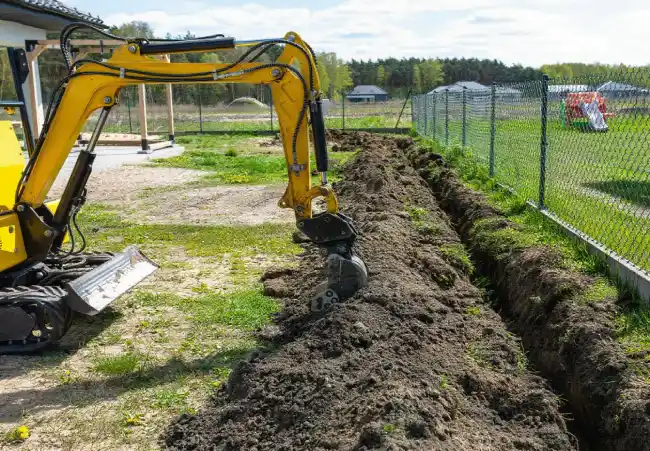
Post-Construction Wrap-Up: Equipment Maintenance and Site Cleanup
Equipment Parking and Maintenance
✅ Park the excavator on flat, firm ground; avoid parking at the trench edge or on soft / unstable areas.
✅ Let the engine idle for 2–3 minutes before shutdown to allow hydraulic system pressure to dissipate.
✅ Clean out any remaining soil from the bucket; inspect the machine for dents, impacts, or oil leaks, and repair promptly if faults are found.
✅ Refill fuel, engine oil, and other necessary fluids to prepare for the next operation.
Site Cleanup
✅ Neatly arrange the spoil along the trench (if backfilling is required later, you may keep the spoil stacked on one side for convenient reuse).
✅ Remove debris, markers, and temporary layout lines from the work area; restore the surrounding environment (e.g., reestablish vegetation, level the ground).
Follow these steps, and you can dig a straight, clean, and safe ditch with your mini excavator.

Posted by Isabel leave words
Thanks for reading. I hope my article helps. Please leave a comment down below. You may also contact YUFAN online customer representative for any further inquiries.
 English
 Arabic
 Chinese (Simplified)
 Dutch
Dutch English
 French
 Italian
 Portuguese
 Russian
 Spanish
Leave a Reply