
 Send Inquiry
Excavator Size Guide for Land Clearing: How to Choose the Right Machine
Contents
The primary criterion for choosing an excavator is its size. The size of an excavator is usually defined by its operating weight (for example, we might say: a 1.5 ton excavator). Excavators come in a wide range of sizes, from compact models under 1 ton to large open-pit mining excavators over 100 tons.
You should select an excavator that best matches your needs — a machine that is too small may not handle the required work, while one that is too large could be cumbersome and significantly more expensive.
Key Size Ranges of Excavators
Here’s a simple excavator size guide to help you quickly see the differences between models and their suitability for land clearing scenarios.
| Operating Weight | Excavator Types | Applications |
| <1 ton (<2204 lbs) | Mini Excavator | Small-scale tasks such as removing small stones or soil in gardens, cleaning up construction debris after house renovations; suitable for very confined spaces, including working inside buildings. |
| <6 ton (<13227 lbs) | Compact Excavator | Clearing shrubs and small trees, removing surface debris such as stones, gravel, and bricks; especially suitable for initial cleanup of wasteland or abandoned sites to prepare for leveling or cultivation. |
| <10 ton (<22046 lbs) | Medium Excavator | Clearing medium to large vegetation and dense shrubs or mixed woodlands; capable of removing hard surface debris including large rocks and concrete blocks weighing 1-3 tons. |
| <30 ton (<66138 lbs) | Standard Excavator | Capable of handling large rocks and concrete blocks weighing 3-10 tons; suitable for pre-mining site clearance and large-scale demolition waste from houses, factories, and bridges. |
| <100 ton (<220,462 lbs) | Large Excavator | Large-scale forest land redevelopment, surface mining, processing of heavy concrete structures and construction waste, and removal of major obstacles such as large tree stumps and rock layers. |
Excavator Land Clearing Operations
Excavators are used for a wide range of land clearing tasks. Common operations include:
▪️Removing trees and stumps
▪️Clearing bushes and shrubs
▪️Eliminating weeds
▪️Collecting debris and trash
▪️Breaking up rocks and boulders
▪️Demolishing existing structures
▪️Removing leftover obstacles
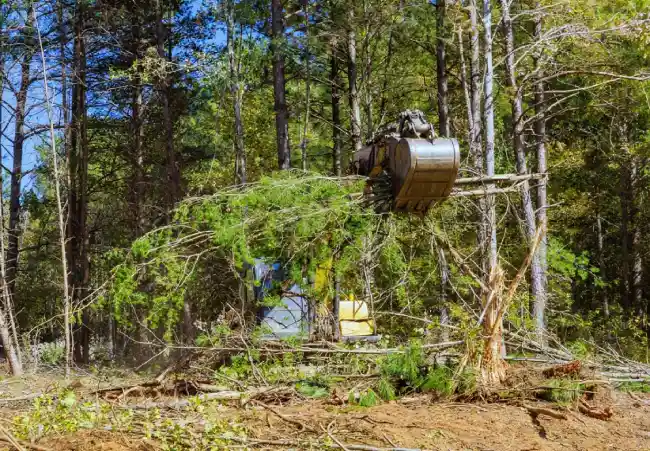
Excavator Sizes for Removing Trees and Stumps
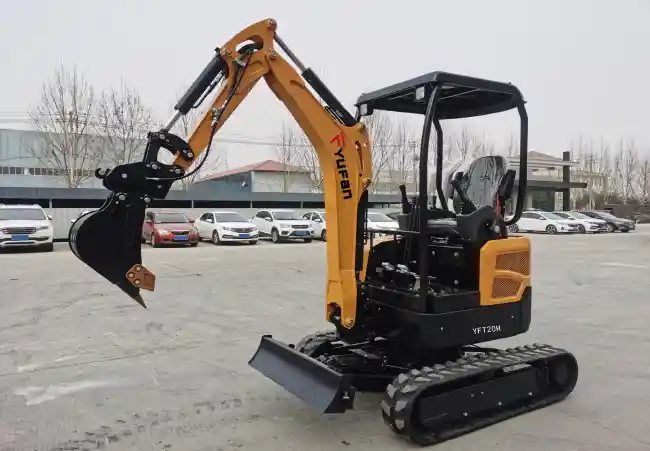
✅ If you want to remove small tree stumps in your garden, around 5 inches in diameter, a micro digger is enough. For example, a 1 ton, 2 ton, or 2.5 ton excavator. The YUFAN 2 ton digger can efficiently clear stumps, small trees, bark, and rocks. When paired with a ripper tooth attachment, it easily digs out roots and prepares your garden land.
2 ton excavator ideal application: backyard land clearing, tight spaces.
✅ For larger stumps around 10 inches in diameter, we recommend using a 3–5 ton excavator, which has more power to handle thicker stumps.
✅ For old, tough stumps around 15 inches in diameter, a medium-sized excavator is more suitable. Common models are 6 ton, 7 ton, 7.5 ton, and 8 ton excavators. These machines provide stronger power and are ideal for clearing large stumps in the woods.
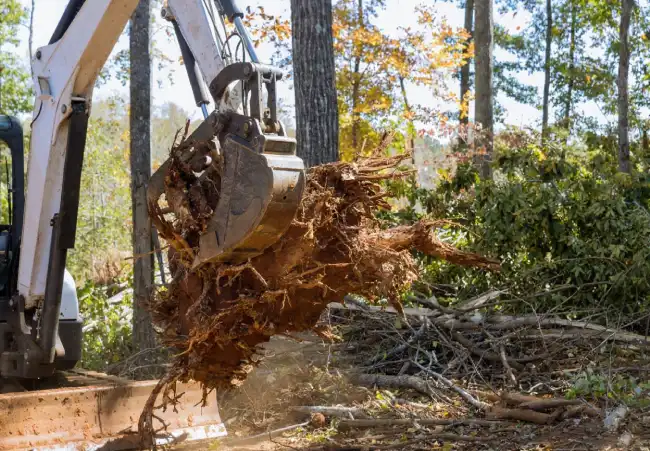
Excavator Sizes for Clearing Bushes and Shrubs
The suitable excavator size for clearing bushes and shrubs generally includes:
✅ Small excavators (1–6 tons): for example, the YUFAN 3.5 ton mini excavator, perfect for removing smaller bushes.
✅ 3–7 ton excavators: often used for cutting and clearing shrubs, thorns, and rose bushes.
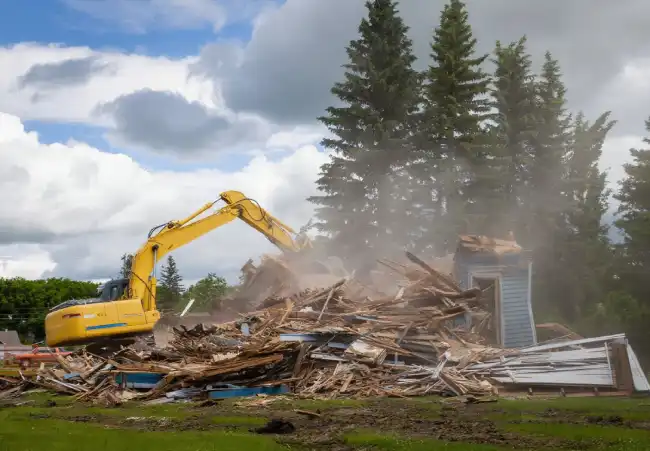
Excavator Sizes for Clearing Construction Debris and Rubble
Construction debris comes in many types and working conditions. Choosing the right excavator size not only improves cleaning efficiency but also helps control operating costs.
Different materials and volumes of waste place very different demands on the equipment. Below are recommended excavator sizes for handling common types of construction waste, provided as a reference for your projects:
| Garbage Type / Working Condition | Recommended Excavator Tonnage | Characteristics | Applicable Scenarios |
| Light Construction Waste (mainly bricks and tiles) | 3-6 ton mini excavator | Flexible and mobile, easy to relocate, low cost | Residential areas, narrow construction sites, small-scale demolition and cleanup |
| Medium Construction Waste (bricks + some concrete blocks) | 6-8 ton medium excavator | Higher operational efficiency, capable of loading, stacking, and loading trucks | Ordinary construction sites, courtyard demolition, moderate-volume cleanup and transportation |
| Heavy Construction Waste (concrete, reinforced concrete) | 10 tons and above | Powerful, can be equipped with hydraulic breakers and grabs, suitable for heavy-duty work | Large demolition sites, reinforced concrete structure cleanup, long-duration operations |
5 Key Factors You Must Consider Before Choosing Excavator Size
Think of this as a practical self-checklist to help you fully evaluate your needs:
1. Site size & terrain – Are there narrow passages or low spaces (like inside a factory building)? Is the ground soft (which may prevent heavy machines from moving safely)?
2. What you’re clearing – Is it weeds, roots, construction debris, or rocks? The harder or bulkier the material, the bigger the excavator tonnage you’ll need — plus the right attachment.
3. Efficiency requirements – Tight deadline? Go for a bigger machine. Small area where precision matters? A mini excavator may be more efficient.
4. Budget – Larger excavators cost more to rent and burn more fuel. Small to mid-size machines are more economical. Balance equipment size with the actual workload.
5. Attachment needs – Will you need a breaker, grapple, or other specialized tools? Excavator tonnage determines which attachments can be used (e.g., small excavators can’t handle heavy breakers).
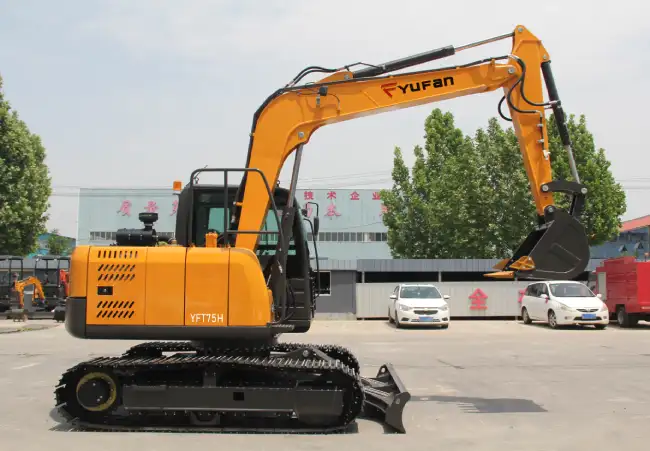
Common Misunderstandings: Bigger Is Always Better
🔘 Myth 1: “Large site = large excavator.”
If the ground is soft, a heavy excavator may sink or get stuck. In such cases, a medium-sized machine can actually be more efficient.
🔘 Myth 2: “Smaller excavator saves money.”
If you’re dealing with big rocks or heavy construction waste, a small excavator will require repeated passes, wasting both time and fuel — which drives up the total cost.
🔘 Myth 3: “Attachments don’t matter.”
For tree removal, you’ll need a grapple; for breaking concrete, a hydraulic breaker is essential. And attachments must match the excavator size — otherwise, you risk equipment damage (“a small horse pulling a big cart”).
Why Choosing the Right Size Matters
The right excavator doesn’t just make land clearing faster and safer — it can also cut project costs and timelines significantly. Remember: the best choice is not the biggest machine, but the one that fits your actual site conditions. If you’re unsure which size to choose, we strongly recommend you:
1. Share project details (such as site photos, type/volume of debris, and target completion time) with a trusted supplier.
2. Invite the service provider for an on-site inspection. They can assess ground conditions, access routes, and surroundings to recommend the most reliable and efficient equipment.
3. Leverage expert experience. Talking with professionals often reveals hidden cost risks and ensures you get the right attachment setup.
Proper equipment selection is the first step to project success. We’re here to provide professional support so you can complete your clearing work efficiently, safely, and economically.
Expert Guidance for Choosing Machinery
If you’re unsure about choosing the right size excavator or loader, YUFAN Machinery can provide professional guidance. We specialize in the sales and service of excavators and loaders. YUFAN is always helping customers select the most suitable and cost-effective equipment! Contact us to make your projects more efficient and easier!
For inquiries or personalized advice, feel free to contact us on WhatsApp: +86 185 6005 2759

Posted by Isabel leave words
Thanks for reading. I hope my article helps. Please leave a comment down below. You may also contact YUFAN online customer representative for any further inquiries.
 English
 Arabic
 Chinese (Simplified)
 Dutch
Dutch English
 French
 Italian
 Portuguese
 Russian
 Spanish
Leave a Reply